
Last reviewed October 15, 2026. General information, not legal or professional advice. Check the linked sources for the current rules.
Start with what goes on top
The right material depends on what ends up sitting on it. A slab, a driveway, a lawn and a garden bed each want something different underneath. Get it wrong and it shows up later as a sunken corner, a rut, or grass that won't take.
Fill dirt
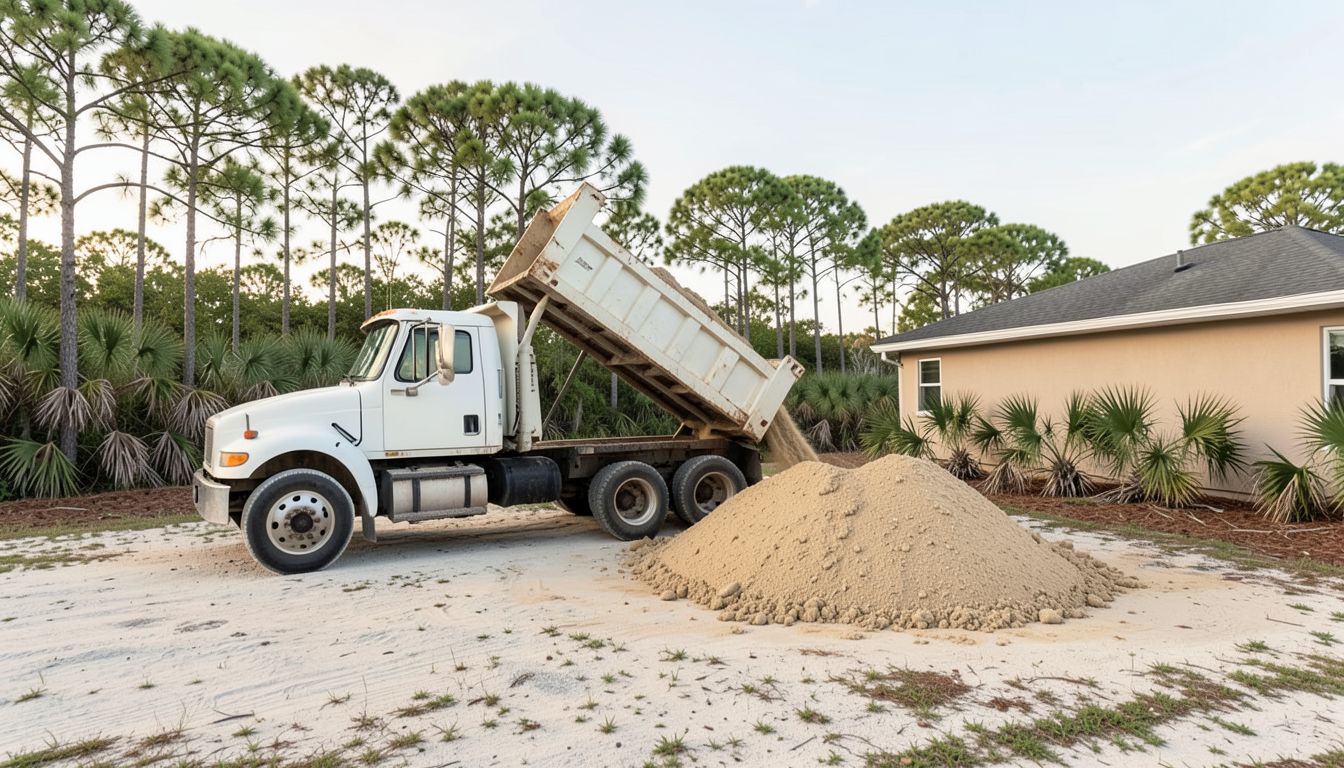
Fill dirt is the general-purpose material. In Brevard it's usually sandy, and it's what you order to raise a low corner, fill a washout or build up a yard. Depending on where it was dug, it can carry some roots, rock or clay.
For a yard or a low spot that's usually fine. If it's going anywhere that has to hold weight, ask what's in it. Fill dirt delivery has more on ordering it from us.
Clean fill
Clean fill is fill with the junk left out: no roots, stumps, trash, concrete chunks or other debris. It's what builders usually want under a building pad, because anything organic inside a pad rots and settles under the slab.
Some plans go further and set a structural fill spec, with compaction and testing requirements. If you're building, the plans or the engineer decide what goes under the house. Send us that page with your quote request.
Asphalt millings
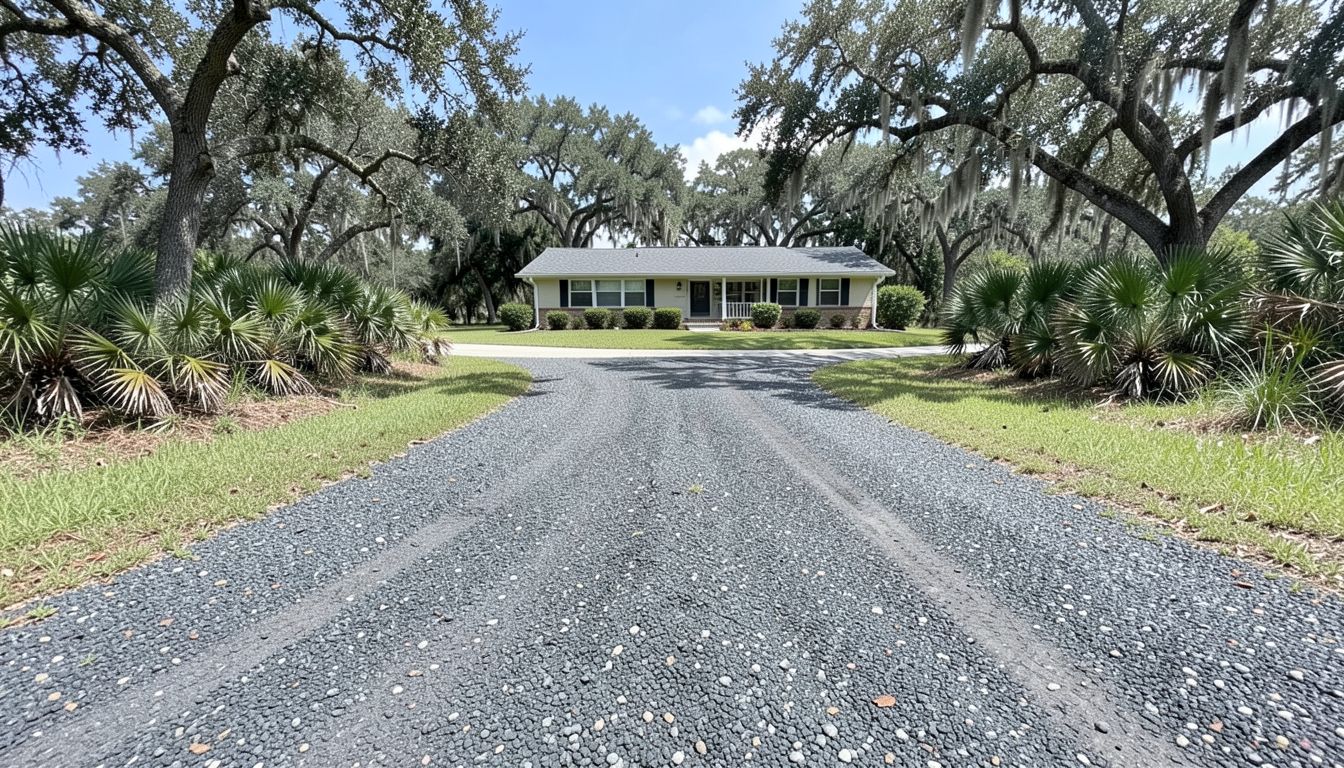
Millings are old asphalt ground off a road when it's resurfaced. Spread, graded and packed down, they make a firm, dark surface that sheds water and handles traffic better than bare sand. People use them for long rural driveways, parking spots beside a garage, and lanes into the back of a property.
Keep them out of planting beds and out from under a slab. Some HOAs and deed restrictions don't allow a millings driveway, so check yours before you order. Asphalt millings covers delivery and millings driveways.
Topsoil
Topsoil is the darker, organic soil plants grow in. It goes on last, a few inches deep, wherever you want sod, seed or a garden. That organic matter is why it never belongs under a pad or a driveway. It compresses and breaks down, and whatever sits on it sinks.
On a yard that's been raised with sandy fill, a layer of topsoil on top can help new grass get going.
Side by side
If you're still not sure which one fits, describe the job when you call and we'll tell you what we'd use.
| Material | Good for | Keep it out of |
|---|---|---|
| Fill dirt | Raising low spots, filling washouts, building up a yard | Anywhere the plans call for clean or structural fill |
| Clean fill | Building pads and ground that has to carry weight | Garden beds, where sandy fill won't feed plants |
| Asphalt millings | Driveways, parking spots, access lanes | Under a slab, planting beds, anywhere your HOA rules them out |
| Topsoil | The top few inches under sod, seed and gardens | Under a pad, a slab or a driveway |
What to tell us when you order
Fill and millings are counted in cubic yards, and a cubic yard is 27 cubic feet. For a rough count, multiply length by width by depth in feet and divide by 27. Then tell us:
- What it's for: a pad, a yard, a driveway or a low spot.
- Whether you want it dumped in a pile, or spread and graded.
- Where the truck can dump and turn around. A loaded tri-axle dump truck is heavy, and soft ground, a drain field or a thin driveway edge can't take it.
- Whether the fill goes near trees you're keeping. In unincorporated Brevard, filling over a tree's roots counts as land clearing under the county code (s. 62-4338).
- Whether any of the area stays wet. Filling a wetland can need a state permit from the St. Johns River Water Management District or FDEP, depending on the project (SJRWMD).
Questions people ask
Is fill dirt the same as sand?
Around here fill dirt is usually sandy, but it isn't always clean sand. It can carry roots, rock or clay depending on where it came from. Ask what's in it if it's going under anything that has to hold weight.
Can topsoil go on top of fill?
Yes, and it's a common way to get grass going on a raised yard. Put the fill down and pack it first, then spread a few inches of topsoil over it.
Do millings need to be compacted?
Yes. Loose millings rut and scatter. Graded and packed down, they lock into a firm surface.